


Introduction
Saudi Arabia has become one of the most sought-after destinations for professionals, skilled workers, and families seeking long-term employment and residency opportunities. With the Kingdom’s rapid economic expansion under Vision 2030, the government has modernized its immigration and labor systems to make the resident visa process more transparent, digital, and structured.
However, despite these improvements, many applicants still face confusion regarding the step-by-step visa process, especially when it comes to MOL approval, Wakala authorization, MOFA visa issuance, and embassy stamping.
This comprehensive 2025 guide explains the entire Saudi resident visa journey, from the initial job offer to final Iqama issuance, in a clear and practical way. Whether you are an employee, employer, or consultant, this guide will help you understand every stage with confidence.
Understanding the Saudi Resident Visa (Iqama)
A Saudi resident visa which is commonly known as an Iqama and it is an official permit allowing a foreign national to live and work legally in Saudi Arabia. It is issued only after completing a structured approval process including multiple government personalities.
Types of Resident Visas
- Work (Employment) Visa
- Family / Dependent Visa
- Investor or Business Residency
- Special Residency known as Premium Residency
This article focuses primarily on the standard employment based resident visa which forms the foundation for most expatriate workers in the Kingdom Saudi Arabia.
Step One: Job Offer and Employment Contract
The resident visa process begins when a Saudi employer offers a job to a foreign national.
Key Requirements:
- The employer must be registered with the Ministry of Human Resources and Social Development mostly known as MHRSD.
- An authorized employment contract must be issued and digitally signed.
- The job title must match the applicant’s educational qualifications.
Once signed, the contract is uploaded to the Qiwa platform, Saudi Arabia’s official labour management system.
MOL / Qiwa Work Permit Approval
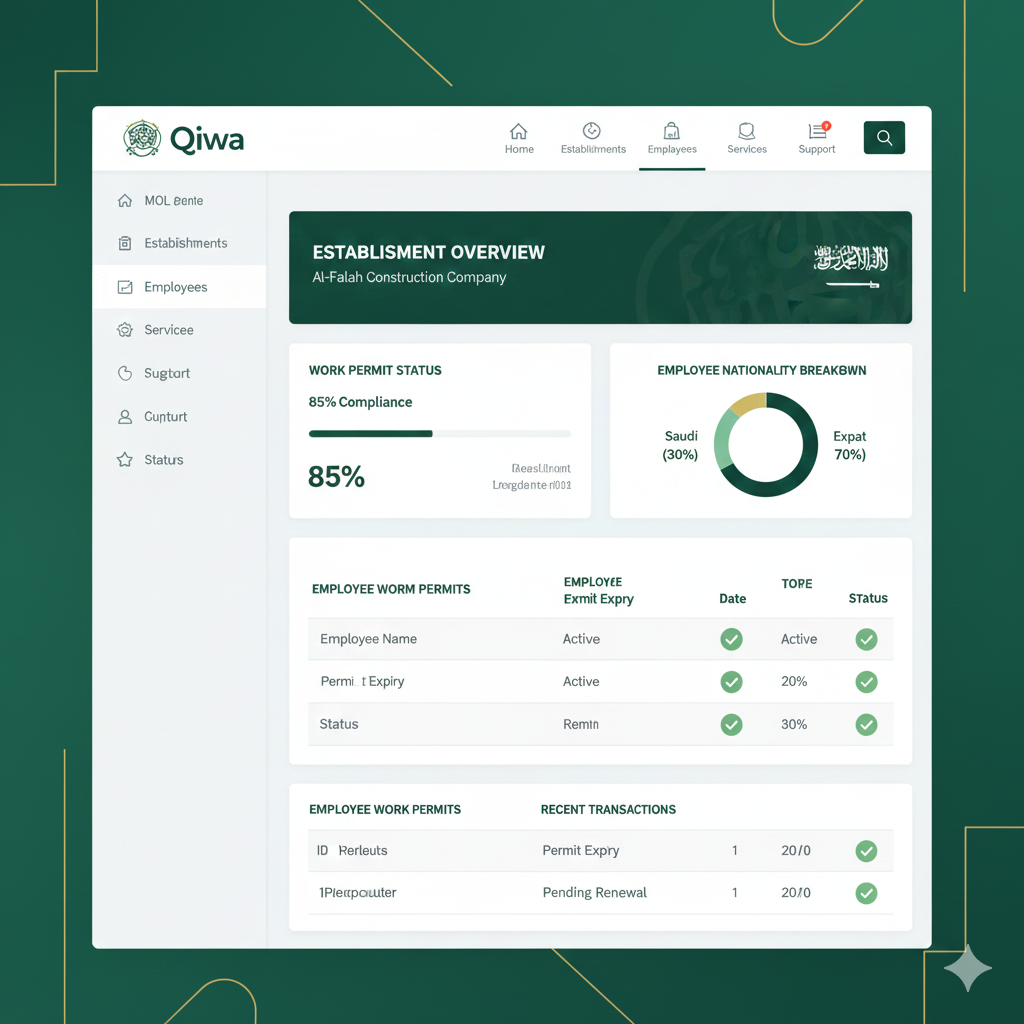
The Qiwa system acts as the backbone of Saudi labour authorization.
What Happens in This Stage:
- The employer submits a request for a work permit.
- The system checks:
- Saudization (Nitaqat) compliance
- Company legal status
- Job category eligibility
- Once approved a work permit number is issued.
This approval legally allows the employer in the Kingdom Saudi Arabia to hire a foreign worker and move forward with visa processing.
The Wakala (Power of Attorney) Process – A Critical Step

What Is Wakala?
A Wakala is a legal power of attorney that authorizes a Saudi employer or licensed agent to act on behalf of the visa applicant in government procedures.
Why Wakala Is Mandatory
Without a registered Wakala:
- The employer cannot submit visa requests to MOFA
- Embassy processing cannot begin
- The visa application remains incomplete
How the Wakala Process Works
- Employer submits a Wakala request through the Absher or MOFA system
- The Wakala includes:
- Applicant name & passport number
- Authorized representative
- Visa category
- Once approved, the Wakala is digitally registered and linked to the applicant’s visa file
PEOPLE ALSO READ : How to Claim Insurance from GOSI in Saudi Arabia — 2025 Complete Guide
This step legally empowers the employer to proceed with the applicant’s immigration process.
MOFA Visa Authorization/Visa Number Issuance
After successful Wakala (وکالا) approval the employer submits a visa request to the Ministry of Foreign Affairs which is MOFA.
MOFA Responsibilities:
- Verify employment and visa category
- Confirm employer authorization
- Issue an electronic visa authorization number
This number is crucial as it is required by Kingdom Saudi Arabia’s embassies worldwide to process visa stamping.
Required Documents at This Stage:
- Passport copy with minimum 6 months validity
- Employment contract
- Wakala confirmation
- Medical insurance which is mandatory from 2025
- Passport size photographs
Embassy Visa Stamping (also known as Consulate Stamping)

Once MOFA which is Ministry of Foreign Affairs issues visa authorization the applicant must complete the process in their home country.
Steps Involved:
- Book an appointment at the Kingdom Saudi Embassy or authorized visa center
- Submit passport and documents
- Provide biometrics if required
- Pay visa and service fees
Processing Time:
Generally, 7 to 15 working days though this may vary from country embassy workload, or security checks.
Once approved the visa is either stamped on their passports or issued electronically.
Entry into Kingdom Saudi Arabia and Iqama Issuance

After receiving visa, the applicant can travel to the Kingdom Saudi Arabia.
Upon Arrival:
- Entry is recorded through immigration systems
- Medical examination is completed
- Biometrics (fingerprints & photo) are captured
- Employer completes Iqama issuance via Absher or Muqeem
The Iqama (اقاما) serves as the official ID of the resident’s and must be renewed periodically.
Kingdom Saudi Arabia is also transitioning toward long term digital residency IDs reducing paperwork and in person visits.
Family Residence Visa Process (Optional)
After receiving the Iqama, residents may apply for family visas for:
- Spouse
- Children
Requirements:
- Valid Iqama
- Minimum salary threshold
- Attested marriage and birth certificates
- Approved family visa application through Absher
Once approved, family members follow a similar embassy stamping process.
Common Mistakes to Avoid
- Submitting incorrect or mismatched job titles
- Skipping the Wakala step
- Using unverified agents
- Not checking embassy-specific requirements
- Delaying medical or biometric appointments
Avoiding these mistakes can save weeks of processing time.
Conclusion
The Kingdom Saudi Arabia resident visa process is more systematic and digital than ever before but it still requires precise and correct documentation proper sequencing and full compliance with government of the Kingdom Saudi Arabia regulations.
From MOL approval and Wakala authorization to MOFA visa issuance and final Iqama registration each step plays a significant role in confirming a smooth transition into life and work in the Kingdom Saudi Arabia.
By understanding the full process and preparing in advance applicants can considerably reduce delays and begin their professional journey in the Kingdom Saudi Arabia with confidence.
Frequently Asked Questions (FAQs)
1. What is a Saudi resident visa (Iqama)?
A Saudi resident visa, also known as an Iqama, allows foreign nationals to live and work legally in Saudi Arabia. It is issued after completing employment, medical, and immigration formalities.
2. What is MOL approval in Saudi Arabia?
MOL (Ministry of Human Resources and Social Development) approval confirms that an employer is authorized to hire a foreign worker and that the job complies with Saudization and labor regulations.
3. Is Wakala mandatory for Saudi visa processing?
Yes. Wakala (Power of Attorney) is mandatory. Without it, employers cannot submit visa applications to MOFA or proceed with embassy processing.
4. What is MOFA visa authorization?
MOFA (Ministry of Foreign Affairs) issues an electronic visa authorization number that allows Saudi embassies to stamp the visa in the applicant’s passport.
5. How long does the Saudi work visa process take?
On average, the complete process takes 3 to 6 weeks, depending on document readiness, embassy workload, and medical clearance timelines.
6. Can I track my Saudi visa application online?
Yes. Applicants can track progress through:
- Qiwa platform (work permit)
- MOFA visa inquiry system
- Embassy or visa center tracking portals
7. What documents are required for Saudi resident visa stamping?
- Passport (minimum 6 months validity)
- Medical report
- Employment contract
- MOFA visa number
- Wakala confirmation
- Passport-size photographs
8. Can family members join me after I get my Iqama?
Yes. Once your Iqama is issued, you can apply for a family residence visa if you meet the salary and documentation requirements.
9. What are common reasons for Saudi visa rejection?
- Incorrect job title or mismatch with qualification
- Missing Wakala
- Incomplete medical reports
- Fake or unverified documents
- Employer non-compliance
10. Is the Saudi resident visa process fully online now? Most steps are digital, including Qiwa, MOFA, Absher, and Muqeem, but embassy visits and biometrics are still required.
READ MORE : Iqama KSA